Run web applications natively within a self-contained, offline environment. App Container provides a dedicated runtime for HTML5 projects without requiring external hosting or connectivity.
Blog
-

App Container Opens for Beta Testing. Apply Now!
AVstudio is excited to announce that our newest product, App Container, is now open for beta testing!
APPLY AS A BETA TESTER: [LINK]We’re proud that AVstudio Editor has already completely transformed AV interface development. Where integrators once faced long hours of complex coding or the constraints of rigid builders, AVstudio Editor introduced a fast, flexible, and intuitive way to design user interfaces.
Now, with App Container, we’re expanding that ecosystem to give you the number one way to view, deploy, and run your projects on mobile devices. Whether your project was built in AVstudio, AMX, QSC, KNX, Crestron, another platform, or even as a custom HTML5 project, App Container lets you run, test, and manage it seamlessly on both iOS and Android.
The Value of App Container
Throughout the development process of an interface or web design, viewing your projects through traditional browsers isn’t enough. They’re limited in stability, remote management, and working with specialized integrations. App Container serves as a reliable and dedicated environment for running, viewing, and managing professional interfaces. While it excels with AV projects, App Container is also built to run website designs or other programs to meet your specific needs.
Key features include:
Simplified Project Management- Create and organize multiple project lists.
- Switch seamlessly between applications.
- Manage deployments, upload archives, and push updates all remotely.
Mobile Web Server Power
- Run apps locally, even without an internet connection.
- Debug with advanced tools, including automatic screenshot capture.
Developer-First Integration
- CI/CD pipeline integration
- Switch seamlessly between applications.
Flexibility Beyond Browsers
- Skip common web limitations
- Compatible with secure and specialized systems
App Container is a dedicated deployment and runtime platform built for the unique needs of AV interface, automation, website, or program development. By combining universality, remote management, and modern debugging tools, it delivers a level of quality that ordinary browsers can’t match.
Help Us Make App Container Better
In our effort to make App Container the best it can be, we invite you to join as a beta tester. As a beta tester, you’ll gain early access to the platform and play an essential role in shaping its future. We value your feedback and encourage you to report any issues, critiques, or questions you may have to our team.
APPLY AS A BETA TESTER: [LINK]
You can also connect with our community for support and discussions:
COMMUNITY: [LINK]
DISCORD: [LINK] -

What’s the Fastest Way to Build a Crestron Interface?

Developing a Crestron interface can be a challenging task, especially when integrators are seeking the perfect balance between the cost of development, the quality of the design, the flexibility of the interface, and the speed of delivery. In today’s UI development landscape, several tools and methods are available for integrators to choose from, each with their own advantages and limitations. The approach you choose can make a notable difference in how effectively a polished and user-friendly interface can be made.
Let’s take a closer look at the main options available and what they bring to the table.Option 1 – Manual Coding
The first and most traditional approach is to code your user interface from scratch. The most significant advantage of this method is having complete control over the design and functionality of the interface. Every single element of the interface, from buttons and layouts to navigation and dynamic behavior, must be manually written, line by line. This enables the creation of truly custom features that may not be possible with pre-built tools.
But the tradeoff is hefty. The overwhelming downside to manual coding is the significant time, knowledge, and budget required to create a professional design. Writing code manually can immensely stretch a project timeline. Even minor adjustments often require digging through the code and extensive retesting. Trial and error is common, and specialized programming knowledge is essential just to get started. For many projects, this method may be entirely impractical due to its scope or budget constraints.
While manual coding offers the most control over a final design, it is almost always the most expensive, time-consuming, and laborious. Fortunately, there are alternatives that make building a polished Crestron interface faster and more accessible.Option 2 – Common Interface Builders
Another approach is to use common interface builders provided by control system manufacturers. These tools simplify the design process by offering a visual approach to development, rather than requiring manual code writing. With drag-and-drop components, preconfigured templates, and guided workflows, integrators can assemble an interface with significantly reduced technical overhead.
The main advantage of these builders is accessibility. Teams with little to no programming experience can create fully functioning interfaces. For straightforward projects, they can be practical, time-saving, and budget-efficient solutions.
However, this option still comes with its own set of issues. Many common interface builders popular on the market today are highly outdated and lack the flexibility to meet modern design needs. Because they are tied to specific manufacturers, integrators are often locked into one ecosystem, limiting cross-platform work. These builders are typically based on standardized templates, which can limit the extent to which you can customize your design. Implementing unique workflows, custom layouts, or tailored branding can be difficult within their limitations.
Common interface builders, although relatively easy to learn, sometimes fall short when projects require a higher level of creativity, flexibility, or innovation. This is where our final option comes in.Option 3 – AVstudio HTML5 Editor
AVstudio Editor bridges the gap between the accessibility of common interface builders and the versatility of manual coding. This visual editor, built on HTML5, allows integrators to design professional, responsive interfaces quickly and cost-effectively.
What makes AVstudio Editor stand out is its combination of speed, flexibility, and customization:- Drag-and-drop editing – build layouts with a visual editor, eliminating the need for manual coding.
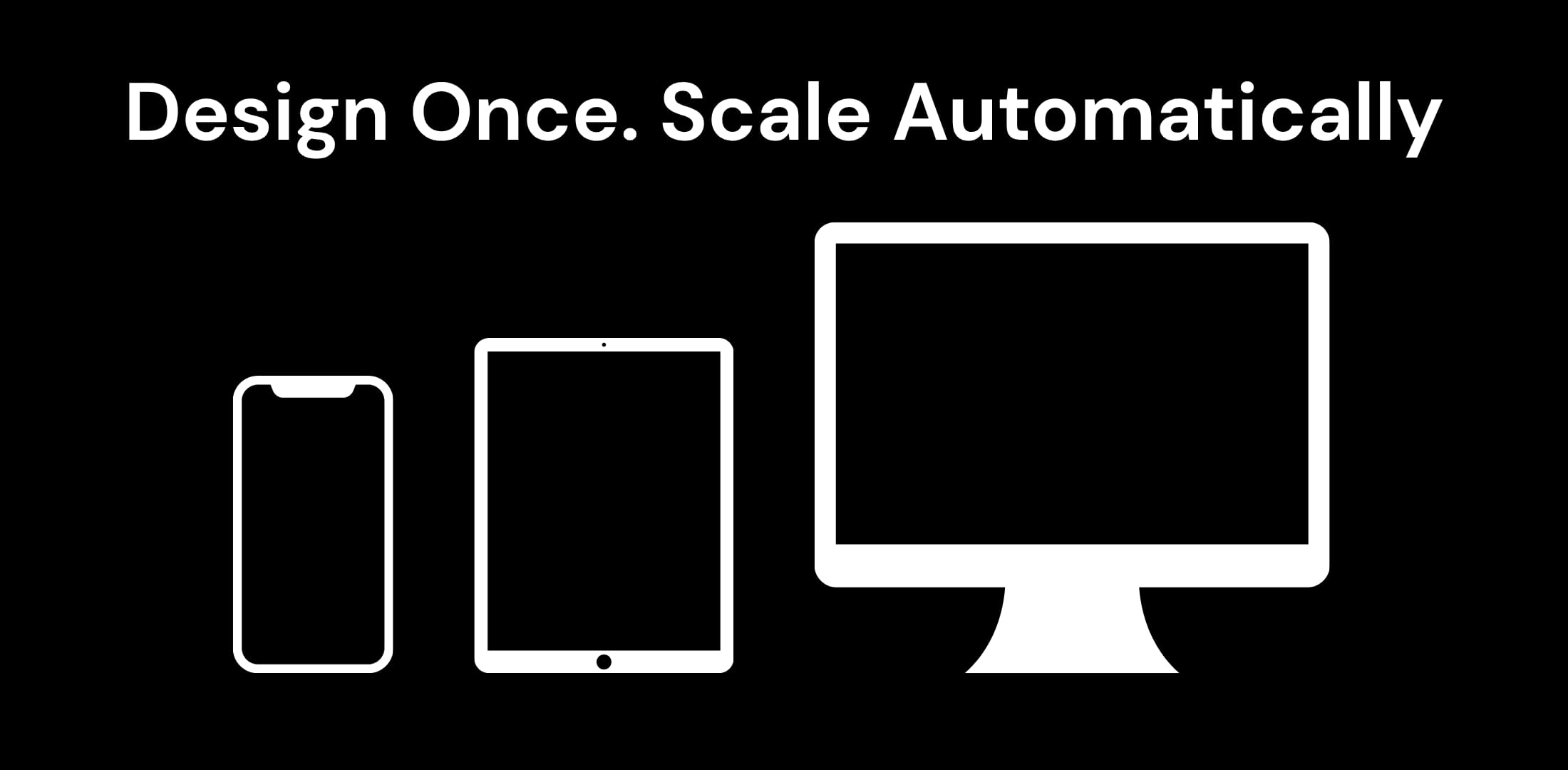
- Responsive design – create layouts that automatically adapt to different screen sizes and devices
- Dynamic pages – reuse logic across multiple views to cut down on repetitive work.
- Reusable templates – start with proven designs and tailor them to your needs.
- Support for custom CSS/JS – add advanced styling and behaviors for complete design freedom
- Live preview mode – test changes instantly without rebuilding and connect directly to real control systems throughout the development process
- Cross-platform compatibility – build once and deploy to multiple devices
- Scalable projects – design both small and complex projects with the process
Unlike many traditional UI builders, AVstudio Editor isn’t tied to one single ecosystem. While it’s often used to create impressive Crestron interfaces, it can also be applied to other platforms, such as AMX, Q-SYS, KNX, and PLC systems. This provides integrators with the utmost versatility, enabling them to work across multiple technologies with a consistent design workflow.
Because AVstudio Editor is modern and continuously updated, you’re never stuck with outdated tools. Instead, you have access to the latest features of the industry. The result is polished projects delivered in a fraction of the time manual coding would take, and with far more flexibility than typical builders allow.
AVstudio Editor empowers integrators to focus on user experience and design quality, rather than getting bogged down in technical roadblocks. For teams seeking to balance speed, cost efficiency, creativity, and versatility for their Crestron interfaces, this is the ideal option.
Start creating with AVstudio Editor today.
AVstudio is an independent software platform. Crestron® is a registered trademark of Crestron Electronics, Inc. AVstudio is not affiliated with or endorsed by Crestron Electronics. -

Modern Nest
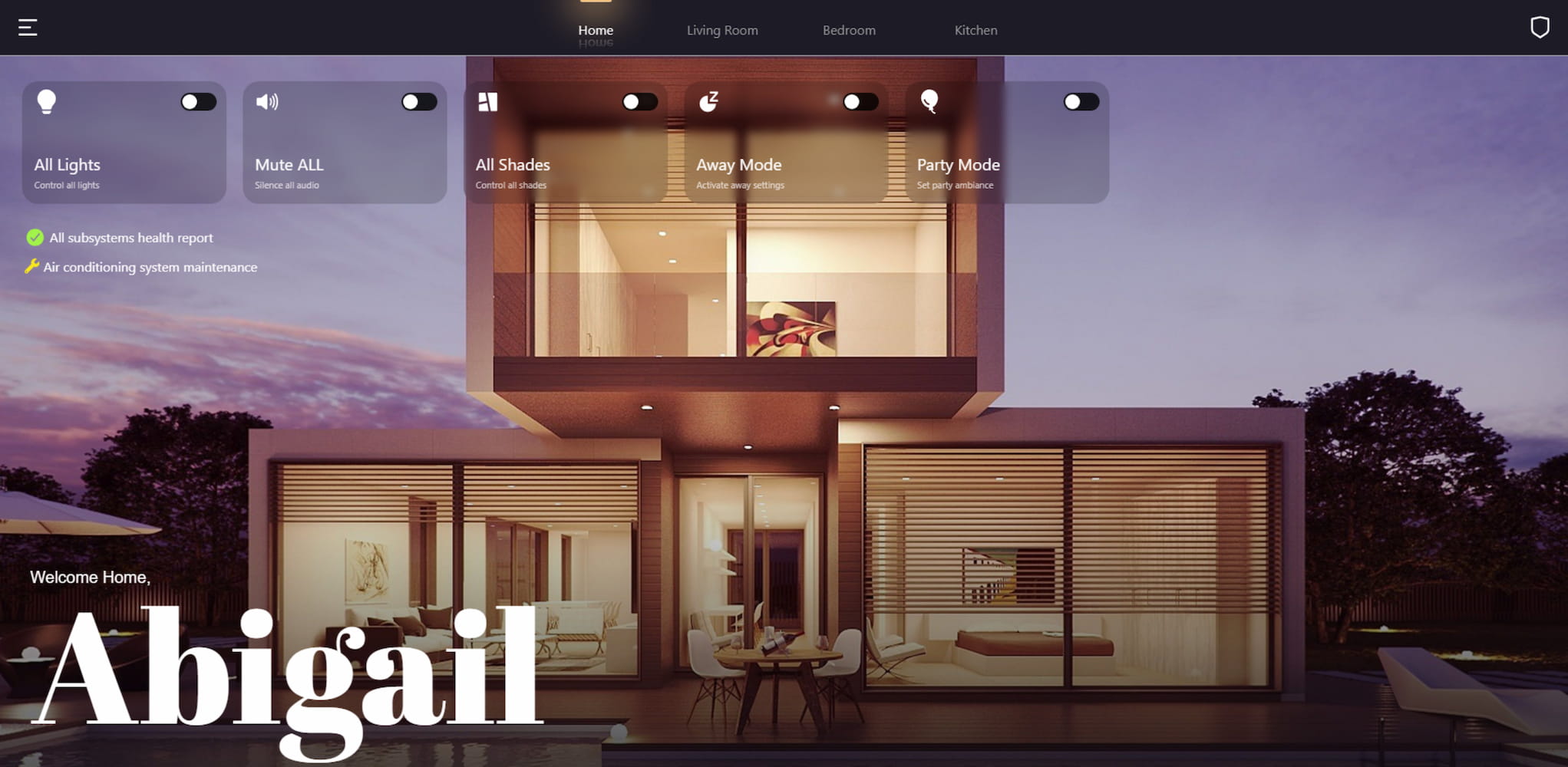
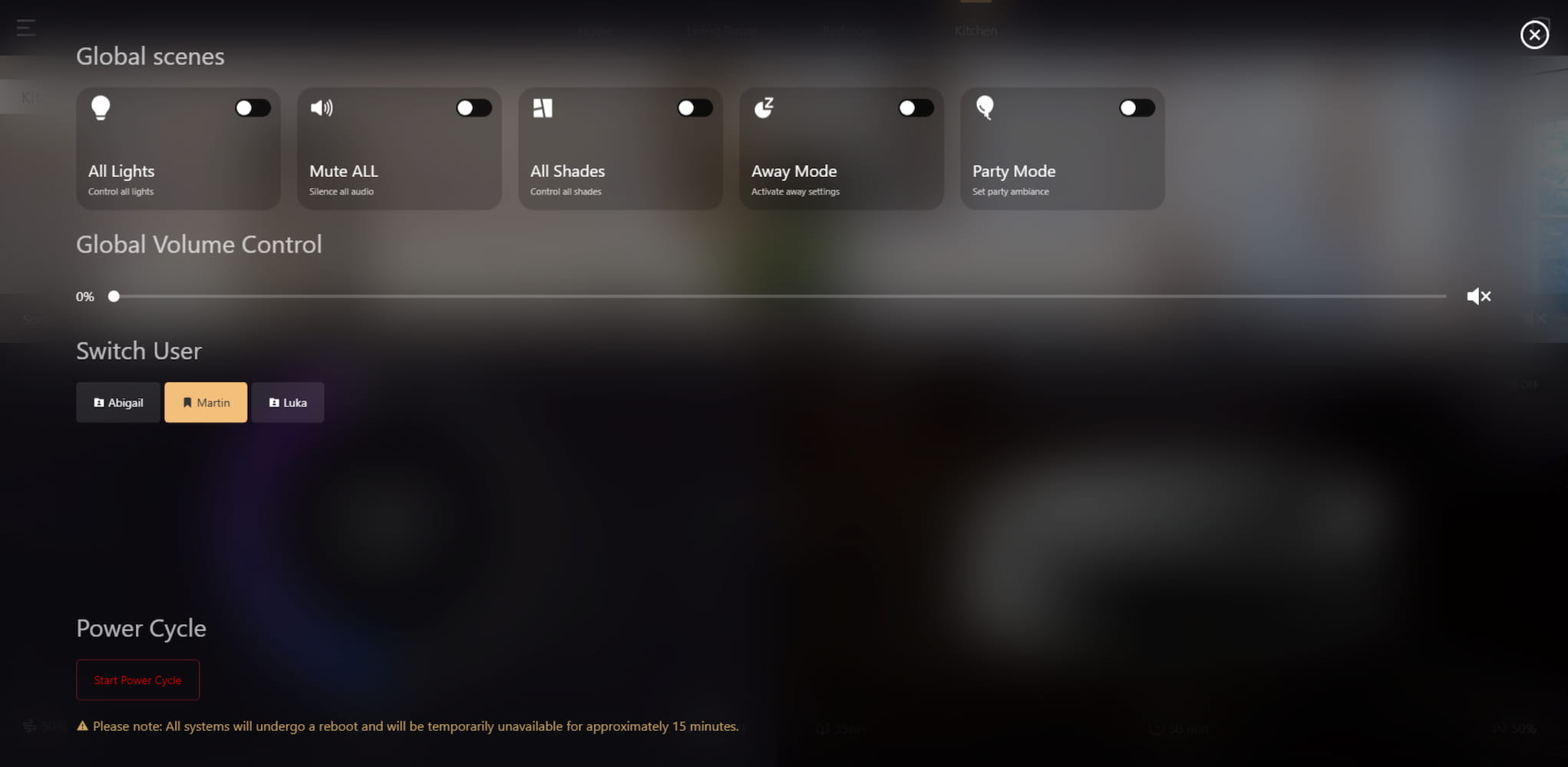
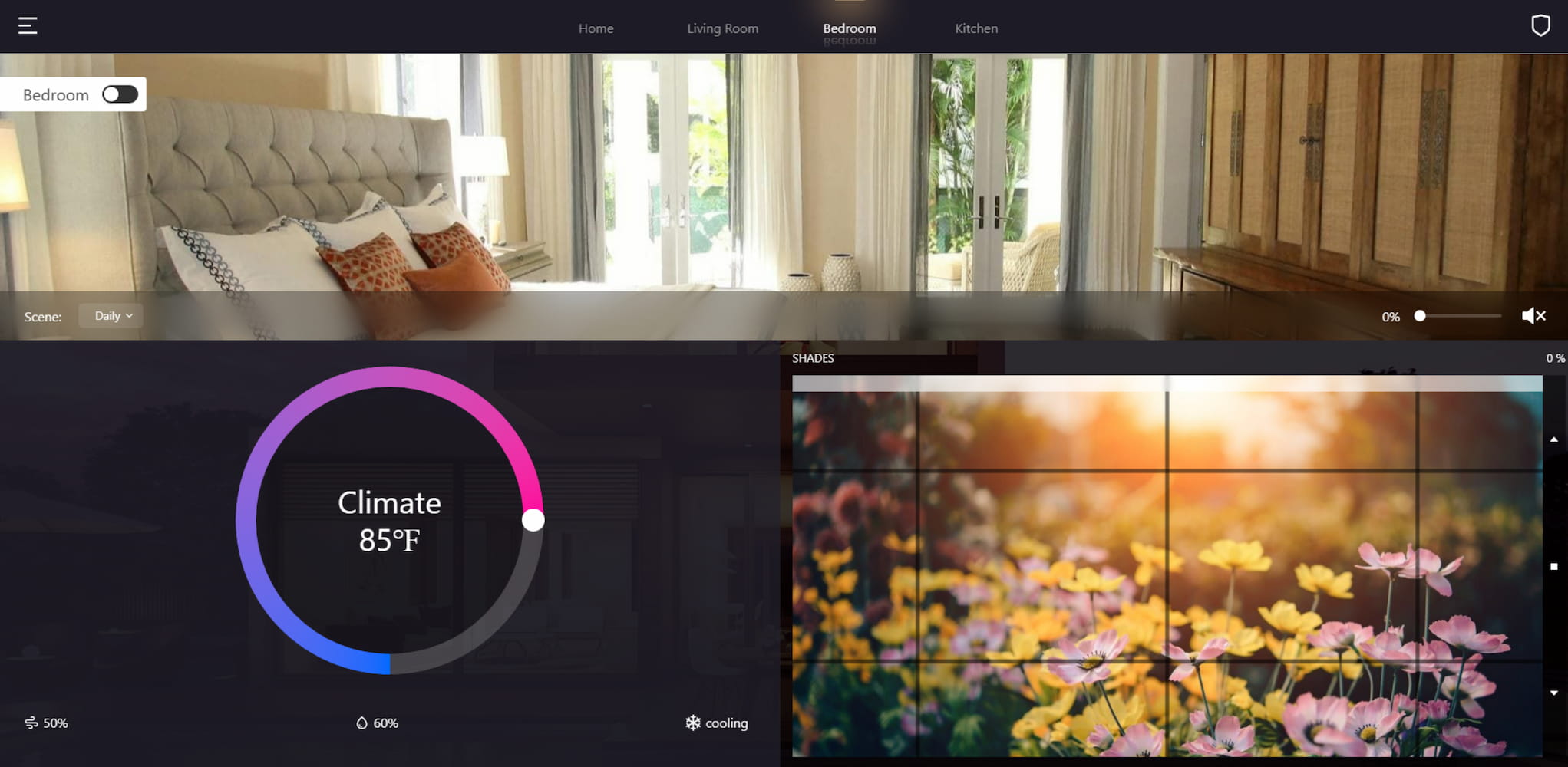
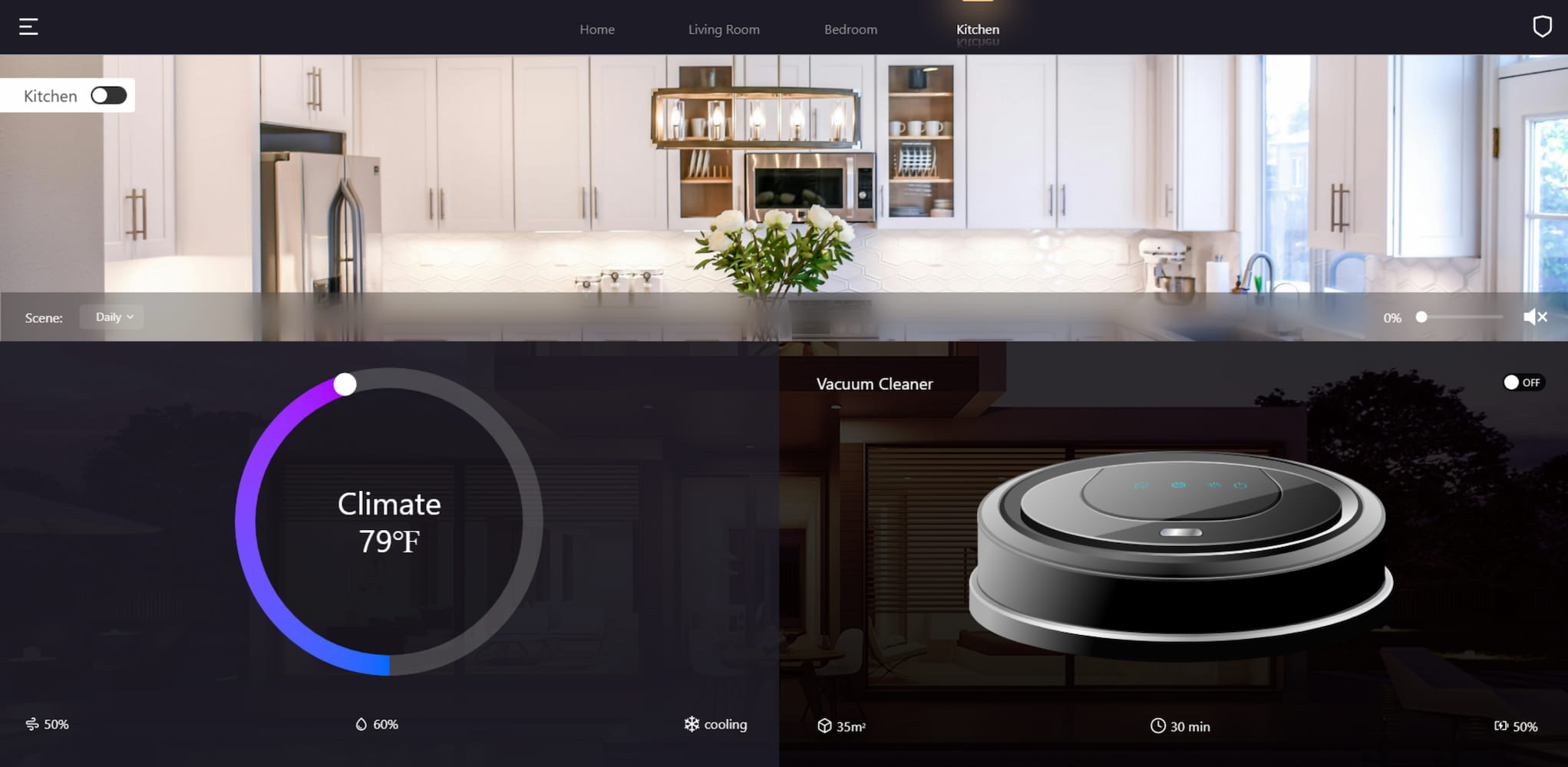
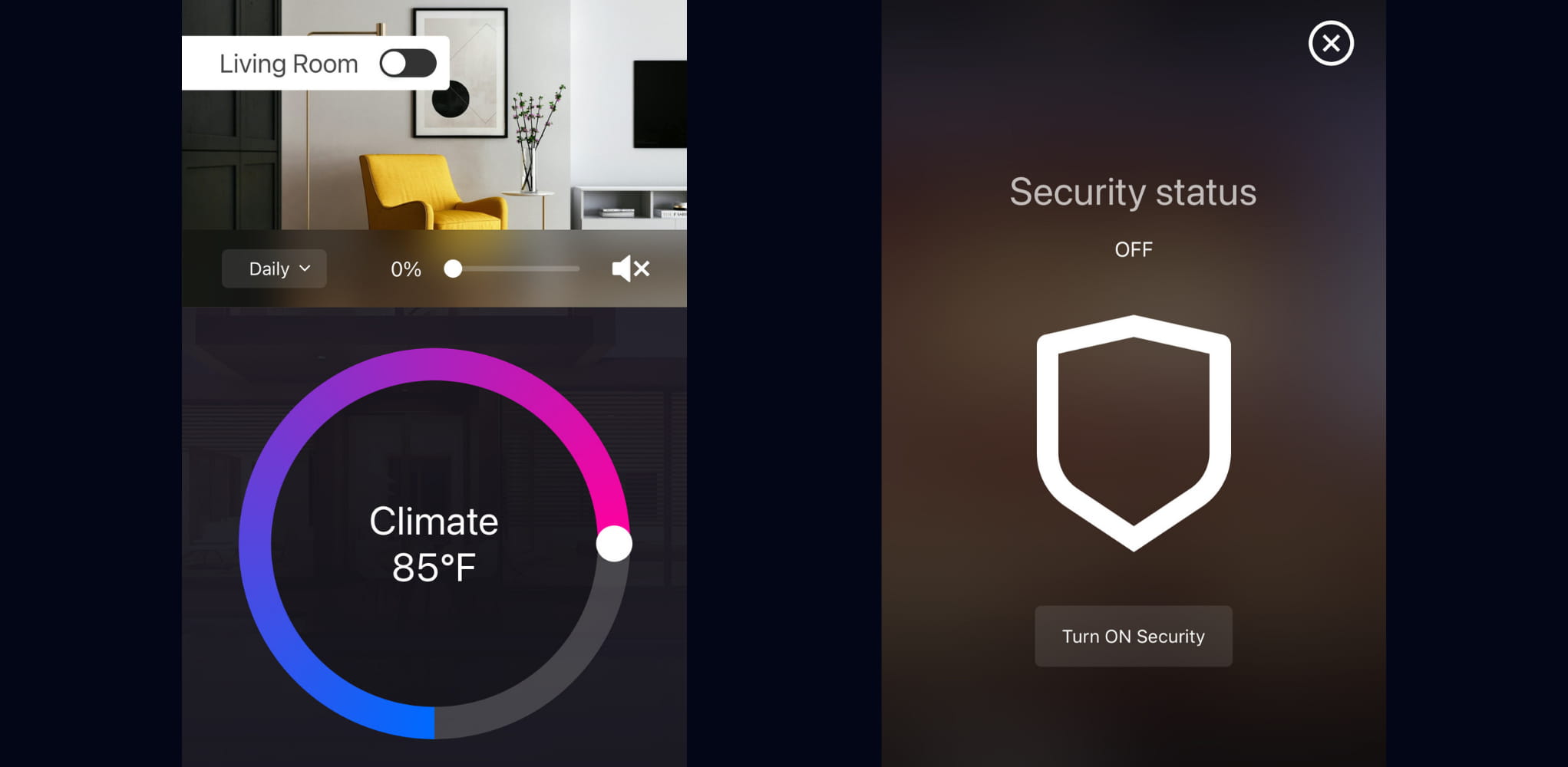
The MODERN NEST HTML5 demo showcases the extensive yet straightforward smart home management capabilities provided by AVstudio Editor.

Why use AVstudio?
Developing a smart home management interface typically requires an extensive and time-consuming development process. MODERN NEST proves how AVstudio Editor accelerates this process, allowing integrators to:
- Drastically reduce development time
- Reduce costs by eliminating the need for any external tools, plug-ins, or additional coding
- Maintain a consistent and fluid design across multiple devices
- Allow both tech-savvy developers and beginners to build polished solutions easily
With AVstudio Editor, building a powerful, smooth, and customizable home management interface has never been easier or more accessible, eliminating the need for months of development and specialized expertise.

Features Showcased
MODERN NEST highlights some of the most common features for a smart home interface, along with unique capabilities:
- Lighting Systems – adjust brightness, switch modes, or configure presets for each room
- Audio Controls – manage sources, volume, and audio selection
- Climate Management – set temperatures, monitor air quality, and set A/C or heating schedules
- Automated Window Shades – raise and lower shades manually or program to align with daylight cycles
- Remote Vacuum Activation – trigger cleaning at scheduled times or manually
- Integrated Security – lock doors, access cameras, and activate alarms remotely
Each system can be arranged individually, attached to preset modes, or saved under user profiles for a versatile and personalized experience.

Flexible, Fast, & Future-Proof
What makes the AVstudio Editor impressive isn’t just what you see here with the MODERN NEST demo template; it’s the limitless capacity for expansion and creativity from developers to further push smart home management systems into the future. This isn’t a fixed showcase, but rather a framework designed to evolve and adjust with ease as customer needs change.
This has a multitude of benefits. For starters, as new smart home products enter the market, AVstudio Editor enables developers to integrate them seamlessly into the existing interface without rebuilding from scratch. Third-party integration is also supported, meaning platforms such as Alexa and Google Home are entirely compatible. AVstudio Editor also allows companies to fully tailor the design of their interface to match their branding. This includes, but is not limited to, logos, colors, and layouts.
Why does this matter?AVstudio Editor ensures that users won’t have to worry about their smart home management system becoming outdated or falling behind in modern technological capabilities. It grows alongside the market. This is especially beneficial in reducing the cost of adding new features by extending them onto already existing builds. It also provides a competitive edge for developers by allowing them to respond to customer needs and new products rapidly.
Simple for Developers and Intuitive for Users
AVstudio Editor delivers a perfect balance between developer efficiency and user simplicity. The MODERN NEST demo template was built entirely with the editor’s standard, built-in tools. This showcases how developers can spend less time coding and more time creating innovative designs. For users, this provides an intuitive navigation and responsive layout that ensures a sense of ease in their home.
AVstudio Editor is flexible across all platforms, fitting seamlessly on tablets in both landscape and portrait modes, as well as phones. This versatility enables users to manage their smart home from anywhere, providing responsive control and convenience.
The Big Picture
While the MODERN NEST demo template is an excellent showcase of the impressive features possible for smart home management interfaces, it demonstrates more than that. It highlights what is possible when development tools are flexible, efficient, and intuitive.
Through the use of AVstudio Editor, scalable smart home systems have never been easier to build, customize, and deploy without any compromise to functional integrity.Start creating with AVstudio Editor today.
-

Version 3.9.0: Color picker, Round slider and more.
New Round Slider Element

We are pleased to introduce our new Round Slider. It features outstanding responsiveness and can seamlessly fit into any environment. It can be adapted both in height and width simultaneously. All content within the slider also automatically adjusts to the element’s size by default, which is highly convenient.
Taking into account your feedback and our previous experience with the earlier version of the slider (Circle Slider One), the internal content is now presented as a standard text field. This allows you to freely arrange the necessary content across any number of lines and format it exactly as you wish.

Extremely responsive slider A rich set of options allows you to style your slider and achieve completely different results that seamlessly fit into your design concept.

In this example, no custom styles were applied – only the basic element option was used. A universal approach to defining the list of element options.
Due to the growing number of elements and their settings, it became necessary to standardize all properties in a consistent style across all elements. We carried out extensive work to group the properties in a clear and convenient way. For now, these properties will only be available in this form for the new elements introduced with this update. In the near future, we will gradually update the properties of all existing elements to bring them into full consistency.

Appearance, content, action, and state now standard sections. Element state management.
For new elements, we’ve made element state storage and usage universal. It can be stored and retrieved from any dynamic source: data sources, parameters, global variables, data received via WebSocket or HTTP requests. The Crestron option remains available. In the future, we’ll upgrade all elements so they can store, retrieve, and send state through any channels, not just Crestron.

New Color Picker Element
It’s time to introduce the new ColorPicker element. It allows you to add any RGB color range.It can store its state with any dynamic data; similar to RoundSlider, it is fully responsive and can adapt to any parent width and height.

Auth improved
We’ve improved the authorization system. Now you can log in not only using the Email and Password combination, but also via the Google platform. In the near future, we’ll add several more convenient authentication methods.

Bug fixes and improvements
- Parameter handling has become much more stable. We fixed issues with boolean parameters, as well as some update and dynamic calculation errors.
- When creating a data source, errors could occur during test data retrieval, test function applications, etc. All these issues have been fixed.
- Color selection in some element layers could be slow. We’ve improved its performance in the following object and will continue working to make this process even more convenient and faster.
- And various other minor fixes and improvements.
-

Join AVstudio at CEDIA Expo/CIX 2025 – See What’s Next in AV Interface Design

We’re excited to announce that AVstudio Inc. will be showcasing at CEDIA Expo/CIX 2025 in Denver, CO, September 4–6.
This is your chance to see the future of AV control system interfaces — live, in action.Whether you’re an AV integrator, programmer, designer, or tech enthusiast, our booth will be the place to experience how modern, responsive, and dynamic interfaces can transform projects.
What You’ll Experience at Booth #4037
🎨 Live Demos of AVstudio
Watch us create sleek, responsive UIs in minutes — not days. Learn how AVstudio can cut your development time by up to 80%.🚀 New AI-Ready Features
Discover our latest tools designed to make UI creation even faster, smarter, and more customizable.🤝 Meet the Team
Share your ideas, get expert insights, and explore how AVstudio can fit into your workflow.🌐 Integration Possibilities
See how AVstudio works seamlessly with Crestron, Q-SYS, Node-Red, Global Caché, and more.
Your Free Expo Pass
We’re offering a FREE Expo Only Pass for our guests.
Simply use Promo Code: AVgator25 when you register.Register here: http://nvyt.es/5ef9df9e231dc65567a9
Let’s Talk at CEDIA
If you want to go deeper into your projects, we’d love to schedule a one-on-one meeting during the show.
Just reach out before the event, and we’ll make sure to set aside time for you.📅 Event: CEDIA Expo/CIX 2025
📍 Location: Denver, CO
🎯 Booth: #4037
📅 Dates: September 4–6, 2025
See you in Denver!
– The AVstudio Team -

AVstudio Inc. – New Name, Same Passion for Perfect Interfaces
Welcome to AVstudio Inc. — the spin-off from AVgator Studio, built to push boundaries and set new standards in UI design for AV control systems.
Our mission stays the same: give AV integrators, designers, and programmers a tool that cuts development time by up to 80% and helps deliver world-class interfaces without complex coding or compromise.
What this move means for you:
- Product-first focus – AVstudio development is now our only priority.
- More resources – growing our team, attracting investment, scaling faster.
- Innovation ahead – AI-powered features, advanced design tools, and faster updates.
If you’ve been with us as an AVgator Studio user — you’re already home. Just visit the new site, log in, and keep creating.
💡 This is only the beginning. Stay tuned for what’s next!
🌐 https://avstudio.app
-

GUI Sample Multi-Language
The GUI Sample Multi-Language HTML5 demo demonstrates how easily an interface can be created through the AVstudio Editor that toggles between languages with the click of a button.

Why Choose Avstudio For Multilingual Interfaces?
Developing a smart home interface that offers the personalization customers deserve is a challenging process in itself, especially when each feature needs to adapt to multiple languages with the click of a button. Luckily, AVstudio has solved this issue. AVstudio Editor simplifies a process that’d typically demand complex coding, numerous redesigns, and extensive localization.
This makes interfaces easily adaptable across languages, time zones, currencies, cultures, and more. The AVstudio Editor’s simple drag-and-drop function alleviates developers from countless hours of work reconstructing designs.
The GUI Sample Multi-Language demo showcases how integrators are now enabled to:- Easily toggle between multiple languages without additional coding
- Reduce costs by eliminating the need for any external tools, plug-ins
- Maintain a consistent and fluid design across every language and device
- Empower developers, both experienced and beginner, to create globally accessible solutions
With AVstudio Editor, designing a multi-language home management interface has never been more efficient, removing the barriers of localization and substantial development time.

Key Features In Action
The GUI Sample Multi-Language demo highlights how core smart home features can be built into a versatile, multilingual interface.
Features include, but are not limited to:- Lighting Systems – adjust brightness manually to specific fixtures or through presets
- Audio Controls – manage sources, music queue, volume, and audio selection
- Climate Management – set temperatures, monitor air quality, establish presets, and set A/C or heating schedules
- Automated Window Shades – raise and lower shades manually or program to align with daylight cycles
- Time and Weather Monitors – view weather updates and monitor time
What sets this demo apart is how every feature can smoothly transition between languages and be adapted to meet localization needs.

Global by Design, Local in Experience
The main advantage of AVstudio Editor, showcased in this demo, is its ability to create interfaces that seamlessly adapt to users worldwide. This isn’t a fixed showcase, but a framework built to adjust to customer needs and personalization.
The benefits are clear. AVstudio Editor makes it simple to configure interfaces between different languages, time zones, and other geographical characteristics, eliminating the need for complicated coding for such a massive overhaul. Developers can use this flexibility to deliver interfaces that adapt effortlessly to every region. The AVstudio Editor also supports seamless integration with third-party smart home products such as Alexa or Google Home, while still giving full autonomy over the interface’s branding, design, and capabilities.
The AVstudio Editor ensures that a smart home management system is not only future-proof but also globally accessible. Developers can quickly adapt to the needs of customers from diverse backgrounds, cultures, and regions. Features can be easily extended across pre-existing builds, while still maintaining a polished and consistent experience.
A Smarter Way to Build Interfaces
The GUI Sample Multi-Language demo was built entirely through AVstudio Editor’s standard, built-in tools. No extra coding or plug-ins were required. This provides developers with an efficiency they can’t find with any other platform, and users with the functional design they’re seeking.
All the features showcased are responsive across various device layouts, including phones and tablets (in portrait or landscape orientation), and possess the ability to switch instantly between different languages.
But the value goes beyond this demo. The GUI Sample Multi-Language template proves what’s possible when interface development tools are flexible, efficient, and built for easy future adjustments.Start creating with the AVstudio Editor today!